CapyFinder
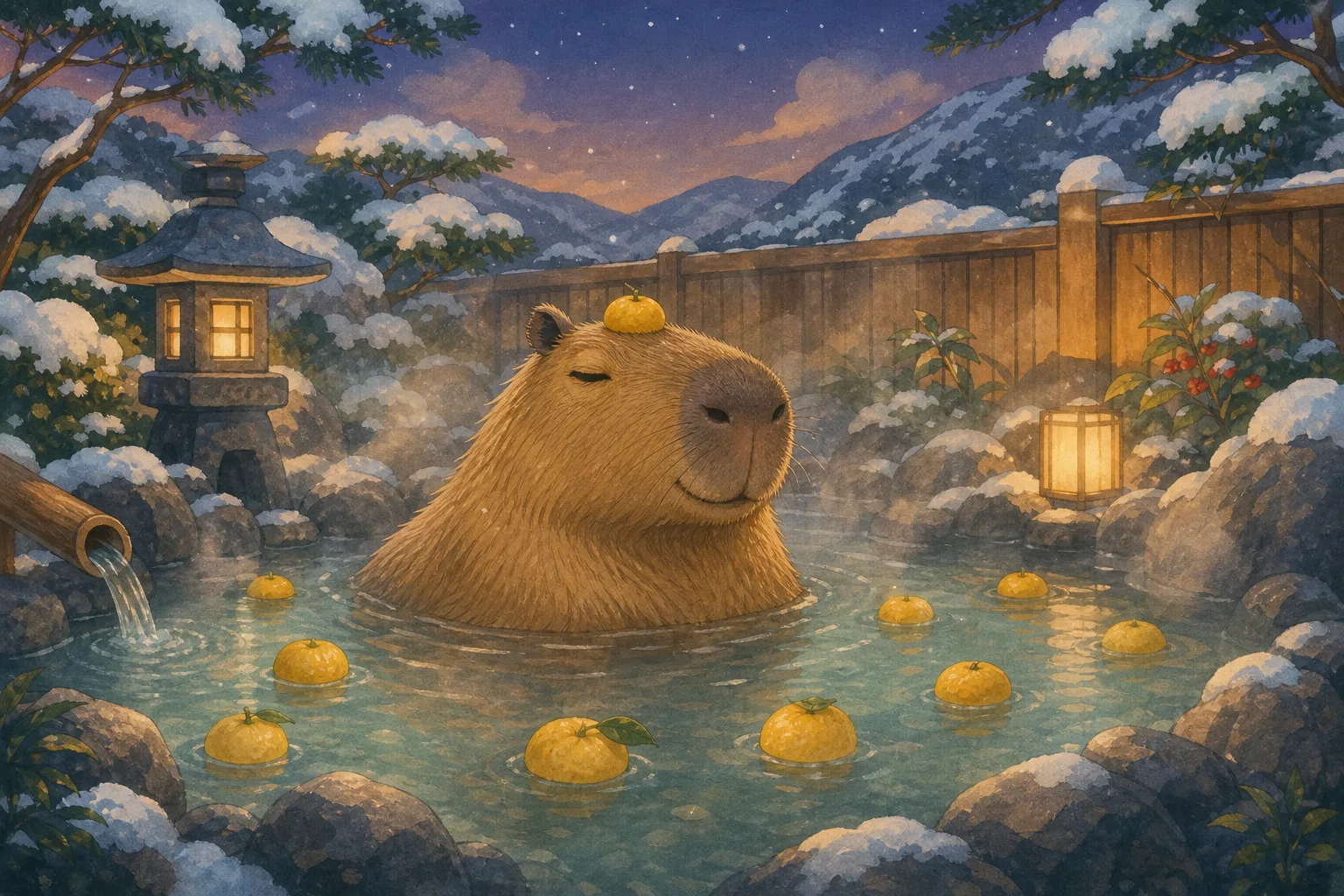
Every winter, several Japanese zoos fill a stone bath with hot spring water and let the capybaras soak. It started at Izu Shaboten Zoo in the 1980s and is now one of the best-loved animal experiences in the country.
When
Most parks run their capybara baths from late November to early April, daily or on set days, usually in the early afternoon. Dates shift a little each year, so check the park’s site the week you go. The yuzu (citrus) baths around the winter solstice in December are the famous photo.
Where
| Park | Prefecture | Typical season |
|---|---|---|
| Izu Shaboten Zoo | Shizuoka | late Nov – early Apr |
| Nagasaki Bio Park | Nagasaki | Dec – Mar |
| Saitama Children’s Zoo | Saitama | Dec – Mar |
| Nasu Animal Kingdom | Tochigi | Dec – Mar |
| Ichikawa City Zoo | Chiba | Dec – Feb |
Izu Shaboten is the original and the most elaborate (it even runs an annual “capybara bath championship” among parks). Nagasaki Bio Park is the most hands-on, with free-roaming capybaras you can feed.
Tips
- Arrive before the bath opens; the viewing rail fills up fast on weekends.
- It is viewing-only. You can’t join the bath, and the capybaras don’t want you to.
- Go on a cold day. Capybaras soak longer and the steam is better for photos.
Planning a trip? Our atlas lists every capybara spot in Japan.